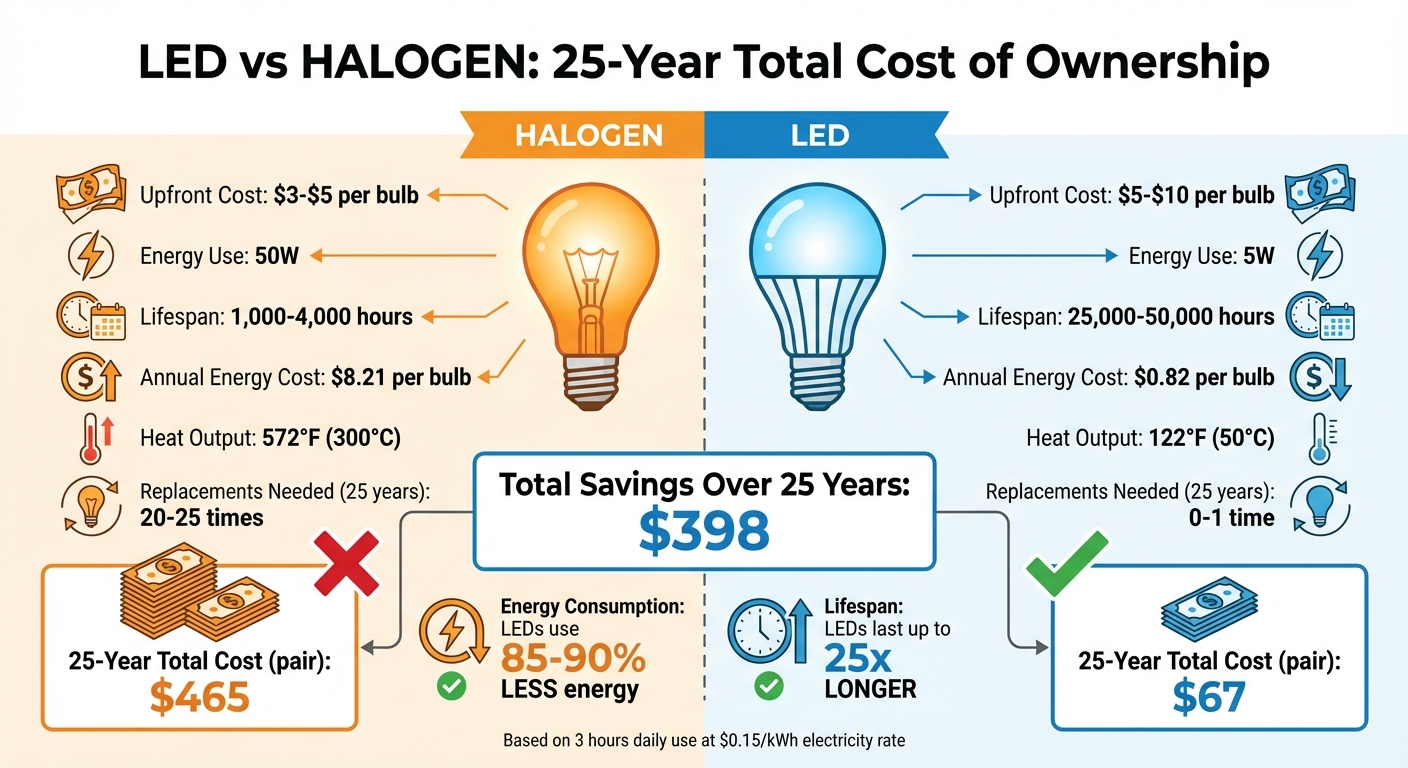
LEDs are the smarter choice for bathroom lighting when considering long-term costs. While halogen bulbs are cheaper upfront ($3–$5 each), LEDs ($5–$10 each) last much longer and use significantly less energy. A 5W LED provides the same brightness as a 50W halogen but consumes 85–90% less energy. Over 25 years, two 35W halogen bulbs could cost you around $465, while two 5W LED bulbs cost just $67, including energy and replacement expenses.
Key Takeaways:
- Energy Savings: LEDs consume 75% less energy than halogens, cutting electricity costs dramatically.
- Lifespan: LEDs last up to 25 years, while halogens need frequent replacements.
- Heat Output: LEDs operate cooler, making them safer for bathrooms. This safety makes them ideal for specialized installations like vanity LED light kits.
- Total Cost of Ownership: LEDs save hundreds of dollars over time.
Quick Comparison:
| Feature | Halogen | LED |
|---|---|---|
| Upfront Cost | $3–$5 per bulb | $5–$10 per bulb |
| Energy Use | 50W | 5W |
| Lifespan | 1,000–4,000 hours | 25,000–50,000 hours |
| Annual Energy Cost | ~$8.21 (50W bulb) | ~$0.82 (5W bulb) |
| 25-Year Ownership Cost | ~$465 (pair of bulbs) | ~$67 (pair of bulbs) |
Switching to LEDs reduces energy bills, maintenance, and replacement costs, making them the better long-term investment for bathroom lighting.
LED vs Halogen Bathroom Lighting: 25-Year Cost Comparison
LED vs. Halogen: comparing light output, energy use & lifespan
sbb-itb-6294289
Upfront Costs: LED vs Halogen Bulbs
Halogen bulbs are priced between $3 and $5 each, while LED bulbs range from $5 to $10 each, making LEDs about three to four times more expensive. If you’re buying in bulk, a 6-pack of halogen bulbs costs around $10 to $15, whereas a similar pack of LEDs is priced at $28 to $30. For more specialized needs, like bi-pin G4 LEDs used in vanity or shower niche LED lighting, prices can vary significantly. For example, a 5W G4 LED might cost $22, while a 1.5W version is closer to $13.
The reason for this price difference lies in the technology. LEDs rely on advanced semiconductor systems to regulate power and heat, whereas halogens use simpler tungsten filaments. This added complexity in design and engineering increases the cost, but it also contributes to LEDs’ longer lifespan and cooler operation.
Interestingly, LED prices have seen a massive drop over the years. Back in 2010, a single LED bulb could cost as much as $40, but by 2023, basic models are available for less than $3. Even though bathroom-rated LED bulbs are still more expensive than halogens, rebates from utility companies can help reduce the initial expense. While LEDs require a higher upfront investment, their durability and energy efficiency lay the groundwork for potential long-term savings. These price differences are key to understanding the overall cost-effectiveness of each option.
Energy Use and Monthly Electricity Costs
LEDs consume significantly less electricity compared to halogen bulbs. For instance, a 5W LED bulb can produce the same brightness as a 50W halogen bulb, meaning LEDs use about 85% to 90% less energy to deliver the same amount of light. In brighter applications, such as bathrooms, a 10W to 12W LED can easily replace a 75W to 100W halogen, offering equivalent brightness.
The difference in efficiency lies in how these technologies generate light. Halogen bulbs waste most of their energy as heat, with surface temperatures reaching up to 572°F (300°C). In contrast, LEDs remain much cooler, operating at around 122°F (50°C). This lower heat output not only enhances safety but also reduces the need for extra cooling, which can help lower air conditioning costs.
"LED bulbs use 75-80% less energy than incandescent bulbs." – Solar Light Meeting
The cost savings are clear when you break it down. At a $0.15/kWh rate and 3 hours of daily use, a single 5W LED costs approximately $0.82 per year to operate. Meanwhile, a 50W halogen bulb costs $8.21 annually, saving you $7.06 per bulb. Similarly, a 90W halogen spotlight costs $14.78 per year, while a 10W LED equivalent runs just $1.64 annually, saving $13.14 per fixture.
An analysis by Expert Electrical in June 2014 highlighted the potential savings in a practical scenario. Replacing six 50W halogen spotlights with 5W LED equivalents, used for 5 hours daily at a $0.15/kWh rate, reduced the yearly electricity cost from $106.77 to $10.69 – a total saving of $96.08 annually for a single room. For bathrooms with multiple fixtures, such as a shower niche LED lighting kit, these savings can add up quickly. Plus, the reduced heat output means your air conditioning system won’t have to work as hard during warmer months. These energy savings also pave the way for further reductions in overall costs when factoring in replacement expenses.
Bulb Lifespan and Replacement Expenses
Halogen bulbs typically last between 1,000 and 4,000 hours, which translates to about 1 to 3 years if used for 4 hours daily. In comparison, LED bulbs boast a lifespan of 25,000 to over 50,000 hours – equivalent to 15 to 25 years under the same conditions.
"Imagine installing a vanity light and not having to replace it for up to 50,000 hours. That’s the LED promise." – Ranney Blair Weidmann
Over a 25-year period, you’d need to replace halogen bulbs 10 to 25 times to match the longevity of a single LED bulb. Considering halogen bulbs cost about $1 to $5 each, that adds up to $25 to $125 in replacements. By contrast, a single LED bulb, priced between $3 and $20, lasts the entire 25 years. The U.S. Department of Energy highlights that LEDs "use at least 75% less energy, and last up to 25 times longer, than incandescent lighting".
LEDs also reduce maintenance costs. In commercial spaces, replacing a single bulb can cost around $5.99 in labor. For those hard-to-reach bathroom ceiling fixtures and shower niche lighting, this means climbing a ladder 10 to 25 times over 25 years for halogens, compared to just once for LEDs. For instance, replacing 35W halogen MR-16 lamps with 7.5W LED equivalents in 1,000 fixtures saved $167,790 over 8 years, mainly due to reduced labor costs – $17,970 annually from frequent halogen replacements.
Additionally, LEDs are better equipped to handle bathroom environments. Many LED bulbs are "damp-rated", making them resistant to moisture and humidity. Their cooler operation also reduces wear on fixtures, leading to fewer emergency replacements and less waste sent to landfills.
When it comes to lifespan and replacement expenses, LEDs clearly outshine halogens, making them a smarter choice for bathroom lighting.
Total Cost of Ownership Over 25 Years
When you compare the total costs over 25 years, the difference between LED and halogen bulbs is striking. For instance, two 35W halogen bulbs could end up costing around $465, while two 5W LED bulbs might only cost about $67 over the same period. That’s nearly a sevenfold cost difference in favor of LEDs.
"While LED bulbs often cost more upfront, the real cost to you isn’t just the purchase price – it’s the power they pull and how long they last." – Hurley Electrical
This dramatic cost advantage comes down to three main factors:
- Fewer Bulb Replacements: LEDs are built to last, often making it through the entire 25 years without needing a replacement, unlike halogens, which require frequent changes.
- Lower Energy Bills: Over 25 years, energy costs for halogens can reach around $342.25, while LEDs only rack up about $34.25.
- Reduced Maintenance Costs: Fewer replacements mean less time, labor, and hassle spent on swapping out bulbs.
Here’s a side-by-side comparison to make the savings crystal clear:
| Cost Metric | Halogen (Pair of 35W bulbs) | LED (Pair of 5W bulbs) |
|---|---|---|
| Upfront Purchase Price | ~$2.00 – $4.00 | ~$6.00 – $16.00 |
| Cumulative Energy Cost (25 years) | ~$342.25 | ~$34.25 |
| Bulb Replacements (over 25 years) | 20–25 replacements | 0–1 replacement |
| Total 25-Year Ownership Cost | ~$465 | ~$67 |
LEDs essentially pay for themselves within 1–2 years through energy savings alone. According to the U.S. Department of Energy, residential LEDs consume at least 75% less energy and last up to 25 times longer than halogen bulbs. These figures highlight how energy efficiency and durability combine to deliver major cost reductions over time. Following smart bathroom lighting tips can further optimize these savings.
For those considering an upgrade, Thunder Bunny offers LED lighting kits tailored for shower niches, floating vanities, and other bathroom features. Not only do these options enhance the style of your space, but they also bring long-term savings on energy and maintenance.
Bathroom Lighting Cost Examples
Here’s a breakdown of costs for various bathroom lighting options. For vanity lighting, wall sconces typically range from $150 to $600 installed, while bath bars cost around $100 to $500. If you’re considering LED lighted mirrors, which combine illumination with functionality, prices vary widely from $200 to $1,500, depending on size and features. For a more budget-friendly option, Thunder Bunny’s Floating Vanity LED Light Kit is priced between $39 and $150. This kit is designed for high-moisture areas like toe kicks or under-vanity setups and offers waterproof, energy-efficient lighting.
For shower and niche lighting, recessed fixtures cost $125 to $300 per fixture, including professional installation. Thunder Bunny’s Shower Niche LED Lighting Kit is another option, priced between $249 and $350. These kits feature IP68-rated waterproof LEDs with a lifespan of 50,000 hours and an IP67 quick disconnect system. This innovative design allows you to replace LED strips without removing tiles, cutting down on maintenance costs.
"Contractors love that our LED light strips can be replaced without removing tile, saving time, money, and frustration." – Thunder Bunny Co
Both Thunder Bunny kits utilize 24V DC low-voltage COB LED technology, which is safe for humid environments and reduces energy consumption by up to 90%. They’re also dimmable and compatible with standard home light switches or specialized LED dimmers, giving you complete control over your bathroom’s lighting and ambiance while keeping energy use in check.
These examples highlight how thoughtful lighting choices can lead to long-term savings and enhanced functionality.
Conclusion
When comparing the numbers, the benefits of LED lighting stand out. Over a span of 10 years, LED fixtures in a typical bathroom setup cost approximately $180, while halogen lighting racks up around $620 – a difference of $440 in savings.
"While LED bulbs tend to cost more upfront than incandescent bulbs, the major cost is not the bulb – it’s the energy consumed over time and the frequency of replacement." – Hurley Electrical
Beyond cost, LEDs operate much cooler than halogens, making them a safer choice for enclosed and high-humidity areas like bathrooms. Opting for damp-rated LED options ensures they’re perfectly suited for these conditions.
Products like Thunder Bunny’s LED kits highlight these advantages. Their Shower Niche LED Lighting Kit (priced between $249 and $350) and Floating Vanity LED Light Kit ($39 to $150) offer waterproof reliability along with significant long-term savings. With lifespans of up to 50,000 hours and energy reductions of up to 90%, these kits provide both immediate functionality and years of efficiency.
Switching to LED lighting not only lowers energy costs but also minimizes maintenance needs and boosts safety – making it a smart, forward-thinking choice for your bathroom.
FAQs
How do I choose the right LED brightness for my bathroom?
When choosing the right LED brightness, think about the purpose of the lighting – whether it’s for general illumination or accent lighting. For bathrooms, you’ll want 4,000–6,000 lumens to ensure bright, practical lighting, especially around vanities where clarity is key. For a cozy, inviting feel, opt for color temperatures between 2700K–3000K, while 4000K–5000K works better for precise task lighting. Smart LEDs with adjustable brightness can be a great option, allowing you to tailor the light to your preferences and the size of your bathroom.
Will LED bulbs work with my existing bathroom dimmer switch?
Yes, LED bulbs can work with your bathroom dimmer switch, but only if the dimmer is compatible with dimmable LED lights. It’s important to check that the dimmer is specifically designed for LEDs, as older or traditional dimmer switches often don’t function correctly with these types of bulbs.
What ratings should bathroom LEDs have for moisture and safety?
Bathroom LEDs need an IP65 rating or higher to ensure they can withstand moisture and remain safe to use. This is particularly crucial for spots exposed to heavy water splashes or steam, like above showers or bathtubs.
Related Blog Posts